

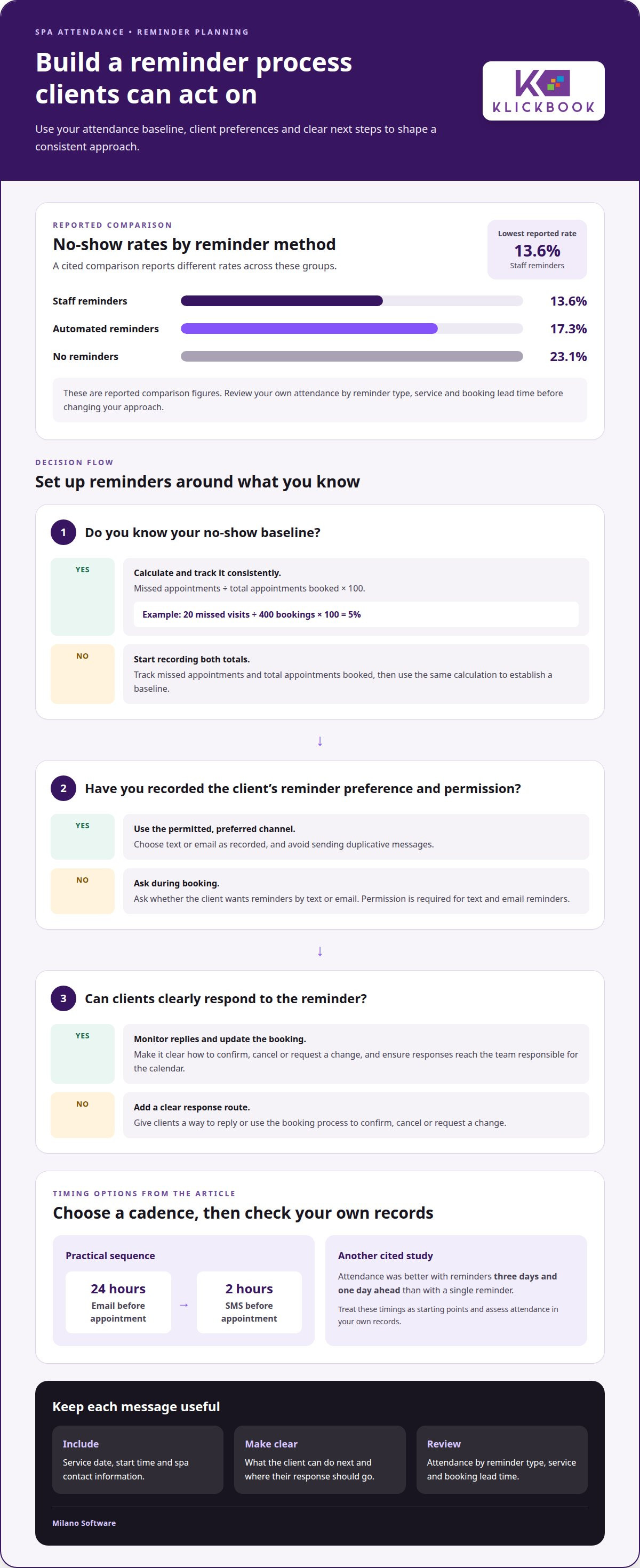
A no-show rate is measurable: divide missed appointments by total appointments booked, then multiply by 100. For example, 20 missed visits among 400 bookings produces a 5% no-show rate. Reducing spa no-show appointments starts with tracking that baseline and identifying where preventable gaps occur.
Missed visits leave treatment rooms unused and disrupt staff schedules, so a clear policy alone may not solve the problem. Reminders, simple cancellation steps and timely follow-ups can help clients act before an appointment slot is lost.
This guide explains how to calculate and monitor your spa’s no-show rate, then respond with reminders, clear cancellation terms, deposits and rescheduling. You’ll learn how to set expectations, follow up after missed visits and use booking and reporting workflows to spot attendance patterns.
Key Takeaways
- Use a consistent reminder cadence and make it easy for clients to confirm, cancel or reschedule before their appointment.
- Review cancellations and missed visits for patterns by service, day and booking lead time, then target follow-up where it can make a difference.
- Set deposits or pre-payment requirements selectively, and explain the terms clearly before a booking is finalized.
- Write a no-show policy that states the notice period, rescheduling rules and consequences, then apply it consistently.
- Connect booking, reporting and point-of-sale workflows to support clearer visibility into spa operations and missed capacity.
Do appointment reminders actually reduce no-shows?
Yes. A cited comparison reports no-show rates of 13.6% with staff reminders, 17.3% with automated reminders and 23.1% without reminders. A structured reminder process can support reducing spa no-show appointments by prompting clients to confirm or act before their visit.
Choose reminder timing and channels
Set reminder timing around the booking lead time, then select the channel the client prefers. A practical sequence is an email 24 hours before the appointment and an SMS two hours before. Another cited study found better attendance when reminders arrived three days and one day ahead, rather than only once. Use these timings as a starting cadence, then assess attendance in your own records.
- Adapt the sequence to the booking. A treatment booked well in advance may need an earlier prompt than a visit scheduled shortly before the appointment. Keep the final reminder close enough to help clients plan their arrival.
- Record channel permission and preference. Ask during booking whether the client wants reminders by text or email. Permission is required for text and email reminders; use the permitted channel and avoid sending duplicative messages.
- Make the next action clear. Let clients confirm, cancel or request a change by replying or using the booking process. A reminder that only repeats the date gives clients less direction when plans change.
Send automated text and email reminders
Configure automated SMS and email appointment reminders with accurate details and a clear response route. Include the service date, start time and spa contact information; avoid adding unrelated promotional content. A client should be able to recognize the booking and understand what to do next. Consistent messages make reducing spa no-show appointments a defined operational process rather than an informal staff task.
- Check each message before activation. Confirm that the appointment details match the booking record and that the reply route is monitored. Incorrect times or an inactive contact method can create confusion instead of prompting action.
- Separate reminders from marketing. Keep the message focused on the scheduled visit. This makes its purpose immediately clear and avoids turning an operational prompt into an unrelated offer.
- Review attendance by reminder type. Compare appointments receiving staff reminders, automated reminders and no reminder. The cited comparison reports different no-show rates across those groups; examine your own results by service and booking lead time before changing the cadence.
- Monitor replies and schedule updates. Ensure staff can see confirmations and cancellation requests, then update the booking record. A reminder only supports schedule management when client responses reach the team responsible for the calendar.
Following up after cancellations and missed appointments
Treat each cancellation as both a client communication and a scheduling task. Clear terms, prompt follow-up and an organized waitlist help protect appointment capacity.
Set clear cancellation and no-show policies
Publish the cancellation policy before a client books and record their acceptance. For Canadian spas, clear disclosure is an important consumer-protection practice: explain deposit terms, notice requirements and any charge before confirming the appointment. Keep the wording consistent across booking confirmations, reminders and staff conversations. Don’t surprise clients with a fee after a missed visit.
Define cancellation windows and fees
Set a cancellation window that gives staff a realistic opportunity to refill the opening. One sample policy asks clients for at least 24 hours’ notice, while another approach allows free cancellation 24 to 48 hours before an appointment and charges for later cancellations. Choose terms that fit the service and schedule, then explain how the policy applies to late cancellations and no-shows.
- State the deadline. Give clients a specific notice period and identify how they can cancel or reschedule.
- Explain the consequence. Say whether late cancellation or non-attendance leads to a charge, deposit retention or another stated outcome.
- Apply the policy consistently. Train staff to use the same terms and document exceptions, so clients receive clear explanations.
Use waitlists to fill cancelled appointments
Organize your waitlist by service, preferred time and availability. When an appointment opens, contact clients whose requests match the slot and give them a clear way to accept. A last-minute offer can work if the client has time to arrive and the service, staff member and treatment room are available. Confirm these details before offering the slot.
- Record useful preferences. Capture the service requested, acceptable days or times, and the best contact channel.
- Contact the closest match first. Offer the exact opening and state the response deadline, so staff can move to the next suitable person promptly.
- Update the schedule immediately. Once accepted, confirm the appointment and remove the client from the relevant waitlist entry.
- Follow up after a missed visit. Contact the client promptly, acknowledge the missed appointment without blame, restate the policy and offer available rescheduling options.
A clear cancellation policy sets expectations, while a responsive waitlist helps recover capacity. Track cancellations and filled openings in your booking records to see whether your follow-up process is working.
Deposits and pre-payment incentives
Use deposits selectively to reinforce booking commitment, not to replace clear cancellation terms. Explain the amount, how it applies and the refund conditions before clients confirm.
- Choose which bookings require a deposit. Apply deposits to services with longer appointment blocks, limited availability or significant preparation. You can require one for every online booking or limit it to first-time clients booking online. A consistent rule helps staff explain why one booking requires payment while another does not.
- Set an amount clients can understand. A deposit of 10% may be enough to encourage clients to attend. Treat this as a starting point for your policy, not a universal formula. Consider the service length, schedule impact and how much advance notice the spa needs to refill a released appointment.
- Define how the payment is applied. State whether the deposit reduces the final balance, transfers to a rescheduled appointment or is retained after a late cancellation. For example, explain the outcome for an on-time cancellation separately from a missed visit. Avoid broad wording that leaves clients unsure what happens to their payment.
- Show the terms before confirmation. Place the deposit amount and cancellation conditions beside the payment step in online booking. Repeat the terms in the booking confirmation, where clients can review them later. A short message should identify the appointment, payment received and the action required if plans change.
- Set exceptions in advance. Decide how staff handle circumstances such as a spa-initiated change, a booking error or a client requesting a transfer. Document the exception process so employees respond consistently. If exceptions depend on notice or available appointments, explain those criteria rather than making informal promises.
- Track deposits against attendance. Compare bookings with deposits against those without them, using the same service categories and review period. Record attendance, timely cancellations, late cancellations and rescheduling separately. This shows whether the deposit policy supports attendance or simply changes how cancellations are recorded.
- Keep payment collection operationally clear. Make sure staff can see whether a deposit was collected and how it should be applied at checkout. Reconcile the booking confirmation with the payment record before closing the appointment. Clear records reduce avoidable disputes and help the team follow the same process for each client.
- Review the policy when patterns shift. If a service continues to experience missed visits, assess its deposit requirement, notice terms and booking lead time together. Adjust the policy deliberately, then communicate the change before clients make their next booking. A deposit works best when clients understand its purpose and the consequences.
Following up and rescheduling missed appointments
Use a consistent follow-up sequence after a missed visit. Record the outcome, contact the client promptly and explain the next booking step.
Contact clients after missed appointments
Wait 10 to 15 minutes past the appointment start time, then contact the client using their preferred channel. Keep the first message neutral: confirm they missed the appointment and invite them to respond. Avoid assuming why they were absent or leading with a charge before checking the booking record and the policy shared at confirmation.
- Verify the appointment record. Confirm the date, start time, service and contact details before reaching out. Check for a cancellation message, schedule change or staff update that may explain the absence.
- Send a concise check-in. Use a direct message such as, “We missed you for your scheduled treatment today. Please reply if you’d like to discuss rescheduling.” This opens a clear path to respond without implying blame.
- Document the interaction. Record the contact time, channel and client response in the booking record. If there’s no reply, note that outcome and follow the spa’s established process rather than sending repeated messages.
Offer rescheduling for missed visits
Give clients a practical way to reschedule while keeping the original appointment status accurate. Offer times that match the treatment, provider and room requirements; don’t record a new booking as a correction to the missed visit. If a deposit or charge applies, explain how the existing policy affects the next appointment.
- Present suitable openings. Offer specific available appointment options instead of asking the client to start over. Confirm that the selected time supports the treatment duration and any required staffing or room allocation.
- Clarify payment handling. Check whether a deposit was collected and explain how it applies under the policy. If a charge is due for the missed visit, communicate the basis clearly before confirming another appointment.
- Complete the new booking. Confirm the treatment, date and time, then send an updated booking confirmation. Make sure the missed visit remains recorded separately, so attendance reporting reflects what happened.
- Review repeat patterns. If the same client misses appointments repeatedly, review their booking history and prior communication. Apply the spa’s stated policy consistently, and document any agreed exception in the client record.
A structured workflow makes follow-up predictable for staff and clients. Review missed-visit records alongside rescheduling outcomes to identify where communication or booking processes need adjustment.
No-show policies and advance notice
Set written rules for notice, missed visits and payment consequences, then apply them consistently. A clearly communicated policy gives clients and staff shared expectations before an appointment is booked.
State no-show policies clearly
Publish the policy wherever clients book and repeat its key terms in the confirmation. Explain what counts as a late cancellation, how clients can give notice and what happens after a missed appointment. Don’t rely on a verbal explanation at check-in, when clients have less opportunity to understand the terms.
- Define the policy terms. Distinguish a timely cancellation from a late cancellation and a no-show. Explain whether rescheduling changes the original booking status or creates a new appointment.
- Make payment consequences explicit. Say whether a missed visit may lead to a partial or full treatment charge, a penalty, or a strike under the policy. Identify how any deposit or payment already collected will be handled.
- Share the policy before booking completion. Place the full terms near the final booking step, not only in a later reminder. Include the same conditions in the confirmation so clients can refer back to them.
- Apply the same process across the team. Give staff a consistent procedure for recording notice, missed appointments and policy outcomes. Avoid changing the stated terms informally from one client or scheduled service to another.
Explain fees and advance notice
Choose a notice window that gives the spa a practical chance to refill an opening. A sample salon policy asks clients for at least 24 hours’ notice, but each spa should align its own deadline with appointment length, preparation needs and scheduling practices. State the deadline and any fee before clients confirm.
- Give clients a clear cancellation route. Explain how to cancel or reschedule, such as through the booking process or by contacting the spa. Include the required notice period in the confirmation and policy text.
- Describe the consequence by scenario. Separate late cancellations from missed visits, and explain how payments, deposits or penalties apply to each. Avoid vague wording such as “a fee may apply” without stating the circumstances.
- Set a reviewable attendance target. Track the show rate by dividing attended appointments by scheduled appointments. Set an internal target of 95% or higher, then review missed visits against service type and day.
- Use warnings consistently. If using progressive enforcement, define each stage in advance. One example charges a no-show fee after 3 missed appointments, following two warnings; communicate the sequence clearly before applying it.
Review policy outcomes alongside attendance trends. If missed appointments persist, check whether clients understand the notice deadline, payment terms and cancellation steps before changing how the policy is enforced.
Milano Software: Spa Management
Milano Software provides spa management tools that bring online booking and operational reporting into a coordinated workflow. Clients can schedule appointments and service packages 24/7 from any device, while spa teams can review booking activity alongside daily performance. These capabilities help operators connect client access with the information needed to manage appointments.
For teams seeking a more coordinated approach to booking and spa operations, Milano Software’s spa management platform offers a practical place to explore the available capabilities. Contact Milano Software to discuss how its tools align with your spa’s operational needs.
Make attendance part of your operating rhythm
Reducing spa no-show appointments is an ongoing operating priority, not a one-time policy change. Review attendance patterns, client responses and schedule recovery regularly. Use what you learn to refine team communications, booking workflows and appointment capacity.
The next step is to connect these practices to the systems your team uses every day. When booking activity and operational reporting are easier to review together, managers can spot process friction and make informed adjustments. Milano Software provides spa management software with online booking and reporting to support coordinated spa operations.
Bring your current scheduling priorities and attendance challenges into the conversation. Contact Milano Software to discuss your spa’s operational needs and identify a practical path forward. A measured, consistent approach gives your team a stronger foundation for managing appointment capacity.
Frequently Asked Questions
How do you calculate your no-show rate?
Use consistent attendance labels so your records reflect genuine missed visits. Decide how to classify appointments that clients reschedule, cancel or change on the same day, then apply those definitions across reporting periods. For example, keep a cancelled appointment distinct from one the client neither attended nor notified the spa about. Consistent labels make trend comparisons more useful for operational decisions.
Do booking deposits reduce no-shows?
Deposits can encourage clients to honour bookings, but assess their effect using your attendance records. Compare similar services and booking types, such as first-time clients who pay deposits and returning clients who don’t. Track attendance, cancellations and rescheduling separately; otherwise, a lower no-show count could simply reflect more early cancellations. Also monitor whether deposits affect booking completion, since both commitment and ease of booking shape the result.
How do I fill a slot after a last-minute cancellation or no-show?
Start with a current list of clients seeking the same service or a compatible appointment time. Check provider availability, treatment duration and room readiness before offering the opening. If a client accepts, update the schedule and send confirmation promptly. For a no-show, record the missed visit accurately first; filling a later opening doesn’t change the original appointment outcome or attendance record.
How do you build a no-show policy that actually works?
Build the policy around consistent operations: define attendance statuses, assign responsibility for recording them and review exceptions regularly. For example, distinguish a client cancellation from a staff-initiated schedule change. Check that employees can explain each outcome in the same way. Review the policy when appointment patterns or service requirements change, and keep a dated version so staff don’t rely on outdated terms.
Who is most at risk of no-shows?
Look for booking circumstances rather than assuming a particular client group is unreliable. A longer gap between booking and treatment can give clients more time to forget, change plans or no longer need the visit. Review attendance by service, booking lead time and day of the week. This helps identify where to strengthen communication without making unsupported assumptions about individuals.
What are the most effective ways for spas to reduce appointment no-shows?
Coordinate the process: measure attendance, send permitted reminders, make cancellation steps clear, follow up after missed visits and review patterns. Assign an owner to each action, such as front-desk staff handling daily follow-up and a manager reviewing attendance trends. This turns separate tactics into a repeatable workflow. Adjust one part at a time to make changes in attendance easier to interpret.
Do online booking and appointment confirmation tools reduce spa no-shows?
They can make booking and schedule changes easier, but a tool alone doesn’t ensure attendance. One reported comparison found median no-show rates of 1.8% for online booking systems and 5.9% for traditional booking methods; it doesn’t establish that booking method caused the difference. Confirmation tools also give clients a clear way to review appointment details and communicate changes, helping staff maintain accurate schedules.
What should a spa no-show policy include, and how should it be communicated?
Include the notice deadline, accepted cancellation methods, consequences for late cancellations or missed appointments, and how deposits or payments are handled. Explain the terms before booking is complete, then repeat the key points in the confirmation. Use consistent wording on booking pages and in staff guidance. Record the policy version shown at booking so the team can answer questions using the applicable terms.


