

A reception desk that is clean, stocked and ready is part of running an efficient spa, not just a finishing touch. Useful spa front desk efficiency tips start with an up-to-date appointment schedule, clear communication about delays and a consistent way to prioritize in-person guests and callers. During busy periods, staff need visible backup; between rushes, they can reset the waiting area and check supplies.
Scheduling is only part of the challenge. A cluttered reception area, missing retail stock or uncertainty about services can interrupt the guest journey just as quickly. The desk runs more smoothly when staff know what to do next, who can support them and where to find accurate service and product information.
This guide covers practical ways to manage appointments and late arrivals, balance walk-ins with calls, coordinate backup during busy periods, and keep service knowledge and supplies current. It also shows how to use quieter intervals for focused resets, so the front desk is ready for the next arrival instead of catching up after a rush.
Key Takeaways
- Use clear scheduling procedures to manage delays, late arrivals and follow-up bookings without creating avoidable gaps.
- Prioritize guests at the desk, handle callers courteously and protect client privacy during busy periods.
- Assign backup reception support and acknowledge each arrival promptly, even when the primary desk is occupied.
- Keep staff knowledge of services, providers and retail products current so recommendations and client guidance are consistent.
- Use quieter intervals to reset the reception area and monitor supplies; spa management software can support booking, point of sale and reporting workflows.
1. Appointment schedule and delay management
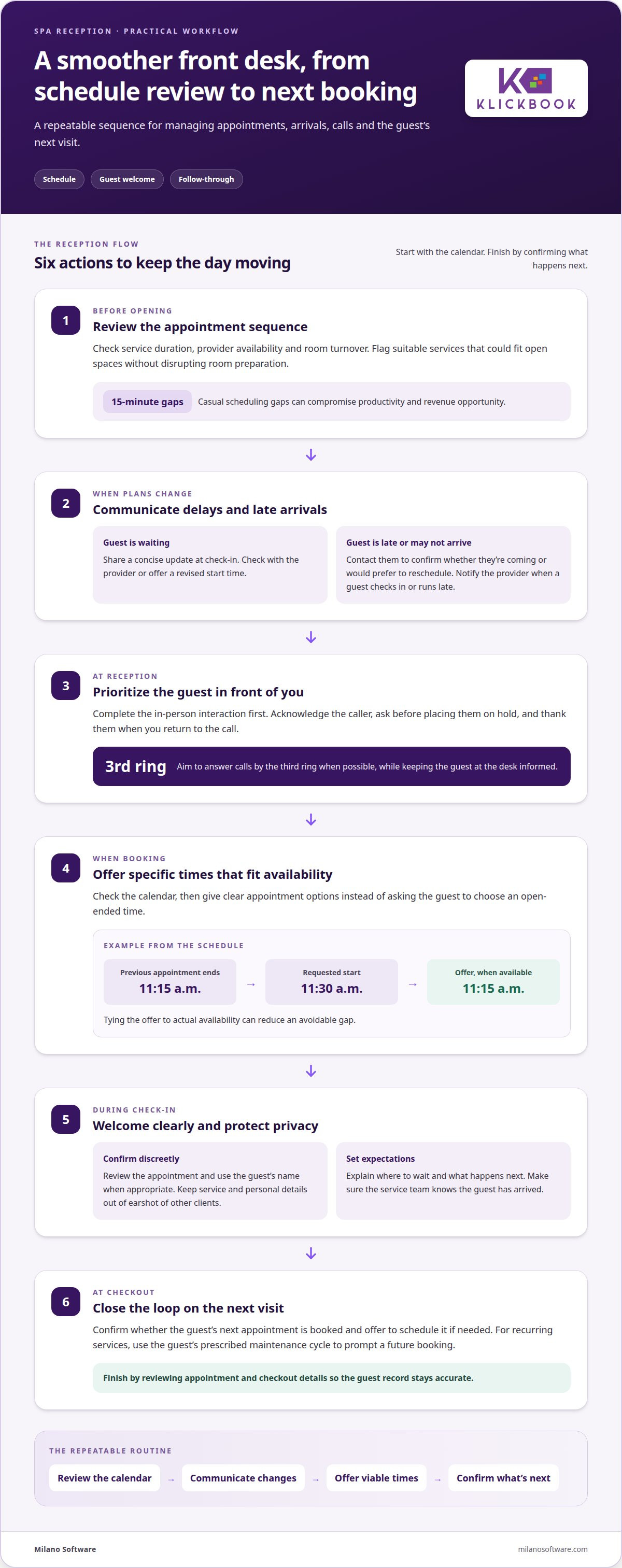
Build the appointment book around service duration, provider availability and room turnover. Casual scheduling that leaves 15-minute gaps can compromise productivity and revenue opportunity. Review the day’s sequence before opening, then flag gaps that could fit suitable services without disrupting room preparation. A consistent schedule gives reception staff a clear reference when callers request alternatives.
Tell arriving guests about delays at check-in instead of waiting for them to ask. Give a concise update and explain the next step, such as checking with the provider or offering a revised start time. If a guest is late or may not arrive, contact them to ask whether they’re still coming or would prefer to reschedule. Notify the service provider when a guest checks in or runs late.
Offer specific appointment options instead of an open-ended request to choose a time. For example, if a previous appointment ends at 11.15am and someone requests 11.30am, offer the 11.15am start when the schedule permits. This reduces an avoidable gap while keeping the booking tied to actual availability. At checkout, confirm whether the guest’s next appointment is booked and offer to schedule it if needed.
For recurring services, use the guest’s prescribed maintenance cycle to prompt a future booking. Staff should follow consistent procedures for scheduling and guest service, while watching for provider or client needs that could disrupt the day. Management software can bring client information, product recommendations and appointment scheduling into the reception workflow. Review appointment and checkout details carefully to keep records accurate.
Handle calls, booking inquiries and common guest questions with a clear sequence: acknowledge the guest at reception, ask callers before placing them on hold, then thank them when returning to the call. Keep concise answers ready for service availability, provider schedules and booking changes. Use the appointment calendar to offer viable options, and avoid discussing client details where others can overhear.
Phone use also affects the reception environment. Keep personal cell phone activity separate from guest-facing duties, and maintain a quieter area for clients who need to make important calls. Keep the spa’s Google Business Profile current with accurate hours, service information and booking instructions. Assign someone to review those details whenever schedules or offerings change.
These spa front desk efficiency tips work best as a repeatable routine: review the calendar, communicate delays, resolve attendance uncertainty and verify the next booking. A clear sequence helps reception staff manage calls without losing control of the day’s schedule.
2. Prioritising walk-in clients and callers
Set a clear service order for reception before the first appointment begins. Prioritize the guest at the desk over a caller, since the in-person interaction is already underway. Acknowledge the caller, ask permission before placing them on hold, and thank them when you return. Aim to answer calls by the third ring when possible, while keeping the guest in front of you informed.
A consistent greeting makes check-in efficient without feeling impersonal. Review the day’s appointments, use the guest’s title and name when appropriate, and confirm the booking discreetly. For a walk-in, clarify the requested service and timing, then check provider availability before promising a start time. If there’s no suitable opening, explain the available choices plainly.
Clear ownership of the next step makes communication more helpful. If a caller wants to book, note their service and timing preferences, then offer options that match the schedule. If you need to consult a provider, explain what you’re doing and when you’ll return. At reception, avoid jargon and answer common questions using current service information, not assumptions.
Protect client privacy throughout every interaction. Don’t discuss a guest’s services, personal details or appointment history within earshot of other clients. Position screens and printed records away from the waiting area, and lower your voice when confirming booking details. If a caller asks about another person’s visit, don’t disclose information; redirect the conversation to general service or booking options.
Prepare digital intake forms and consent documents for guests before arrival, then identify any outstanding items during check-in. Explain the available payment process when confirming the booking, including whether payment is arranged before or after the service. Keep consent discussions private and give guests room to raise questions before proceeding. These steps reduce desk-side administration without rushing the welcome.
Personalize the welcome using relevant appointment information, not a public conversation. A returning guest’s name or preferred provider can make the greeting specific; a first-time visitor may need a brief orientation. Explain where to wait and what happens next, then confirm that the service team knows the guest has arrived. Record useful preferences through the spa’s established client-file process.
Use the same sequence during simultaneous arrivals: acknowledge each person, complete the current check-in, and give waiting guests a clear update. Reception routines can be supported by centralized spa management workflows, keeping booking and guest-service processes aligned.
3. Backing up reception during busy periods
For Canadian spas, plan reception coverage around overlapping arrivals, departures and incoming calls, rather than using a fixed headcount. Assign a trained backup employee for exceptionally busy periods or when the regular receptionist is away. The staffing plan should identify who takes over, which tasks they can perform and when support is activated.
Set a clear trigger for backup. For example, call in support when a check-in queue forms while checkout and phone duties are still active. The backup can greet arrivals, direct guests to the waiting area or handle a defined transaction. Keep one person accountable for the appointment record so two employees don’t change the same booking independently.
Acknowledge every arriving guest promptly, even when reception is occupied. A brief greeting and a clear indication that staff will help next can prevent arrivals from feeling overlooked. If a guest is waiting, provide a practical update, such as where to sit or which employee will assist. Avoid calling out personal appointment details across the lobby.
Use available facility cameras to monitor treatment and service status, then assess when a guest may be ready for checkout. Cameras can support workflow awareness, but they don’t replace direct coordination with providers. For example, a receptionist can confirm readiness with the service team before preparing the checkout record. Keep the handoff clear when several departures are approaching together.
Reception coverage depends on the work arriving at the desk: appointments, payments, guest questions and provider coordination. Rather than applying an unsupported universal ratio, map peak periods against these simultaneous tasks. A resort spa may need different coverage for group arrivals than a day spa handling staggered appointments. Review the pattern and adjust backup responsibilities accordingly.
Train staff in customer service, scheduling procedures, payment steps and escalation routes. Include service providers where relevant, then monitor how reception and providers coordinate guest handoffs. For example, practise a mock rush: one employee greets arrivals, another manages checkout, and a provider confirms service readiness. Managers should observe, address process gaps and reinforce consistent procedures.
Staff selection and coaching matter as much as coverage. Hire for relevant communication and organization skills, then train employees thoroughly in the spa’s service standards. During operational reviews, check whether staff acknowledge arrivals, give accurate updates and ask for help before queues become difficult. Use specific examples from observed shifts to address issues rather than relying on general reminders.
A short shift briefing makes the backup plan practical: name the designated support person, confirm their responsibilities and identify expected pressure points. When calls and check-in or checkout queues become difficult to manage, reception staff should ask for help early. Early escalation keeps guest-facing work moving while preserving clear ownership of records and handoffs.
4. Knowledge of services, providers, and retail products
Support retail sales and rebooking by making one relevant recommendation and one future-booking prompt part of checkout. Ask how the guest liked the service, identify any at-home maintenance need, then complete payment and booking steps in a consistent order. This keeps advice specific without turning checkout into a lengthy consultation.
Reception staff should understand the spa’s services, treatment costs, etiquette and provider specialties. Maintain a concise reference with each service’s purpose, duration, preparation requirements and suitable provider. When a guest asks about a treatment, staff can explain the options and identify providers whose specialties match the request. Confirm details against current service information before making a commitment.
Product knowledge should cover features, benefits and intended use. Train front-desk employees on the same product information used by service providers, so recommendations stay consistent from treatment room to checkout. A practical reference can group retail products by skin or hair maintenance need, with key usage instructions and relevant services. Staff can then suggest an appropriate item without making claims beyond its stated benefits.
Keep provider profiles practical rather than promotional. Record each provider’s services, strengths, specialties and availability in a format reception can consult quickly. If a guest requests a particular outcome, staff can match the request to a relevant specialty instead of recommending solely by availability. Accurate profiles also help explain alternatives when the preferred provider’s schedule is full.
Use a brief checkout conversation to learn how the guest feels and identify the next step. Ask, “How did the service feel?” then give the guest space to answer. If they mention a maintenance need, offer a suitable retail option; if the service follows a recurring cycle, ask whether they’d like to reserve a future appointment. Keep both suggestions optional and relevant to what the guest has shared.
Organize training around realistic scenarios. Practise answering questions about treatment etiquette, matching a guest with a provider specialty, and explaining a product’s features and benefits. Managers can observe checkout conversations and correct inaccurate descriptions or recommendations. A shared product and service reference helps new and experienced staff use consistent language.
Keep education separate from transaction processing. Prepare the service record and payment workflow before discussing a product or future booking, then record the guest’s decision promptly. If a question requires a provider’s expertise, arrange a clear handoff rather than guessing. Staff can record useful preferences in the client file, giving the next interaction relevant context.
Knowledge becomes useful when it guides the next action: answer accurately, recommend appropriately or connect the guest with the right provider. A brief, consistent checkout sequence protects service quality while creating a natural opportunity for retail and rebooking.
5. Front desk cleanliness and inventory
Reception cleanliness and stock readiness shape guests’ first and last impressions. Assign specific reset tasks for quiet periods: clear used cups, remove visible waste, straighten retail displays and return misplaced materials. A concise checklist clarifies ownership across shifts. Keep unnecessary paperwork off the counter so staff can find booking and checkout materials without searching during arrivals.
Treat the waiting area as part of the guest experience, not overflow storage. Remove outdated magazines, keep reading material suited to the spa’s clientele, and arrange seating so the entrance and reception desk remain accessible. Staff can check the area after a departure and restore it before the next guest arrives. Address visible clutter as it appears instead of leaving it for closing duties.
Track retail, back-bar and dispensary stock through a routine that links observation to ordering. Record items approaching their reorder point, note unexpected depletion and assign someone to submit orders. A product on the retail shelf may also support service delivery, so keep retail quantities separate from back-bar use. This helps managers identify whether demand, replenishment timing or recording practices caused a shortage.
Managers should track reset completion, stockouts, inventory discrepancies, replenishment timing and checkout interruptions caused by missing supplies. There’s no single useful benchmark across Canadian spas; establish a baseline for each measure, then compare similar operating periods and locations. Set internal targets based on service needs, sales patterns and supplier lead times, and investigate repeated gaps instead of treating every variance as routine.
Keep inventory records practical. Use consistent product names, record quantities received and used, and document damaged or expired stock according to the spa’s procedures. During a shelf check, compare the physical count with the recorded balance. If they differ, review recent sales and service use before adjusting the record. This leaves a traceable explanation for the change.
Build the reset into shift handoffs. The outgoing employee can flag low stock, incomplete tidying and items needing follow-up; the incoming employee can confirm those tasks before the next rush. A tidy counter, current magazines and orderly retail shelves make items easier to find and product presentation more consistent. Store cleaning materials and stock in their designated locations, not on guest-facing surfaces.
Point-of-sale records can support retail transaction tracking alongside physical stock checks. Explore point-of-sale capabilities for spa retail operations to connect checkout workflows with this inventory discipline.
Milano Software: Spa Management
Milano Software’s spa management platform supports the workflows behind a more controlled front desk. Centralized online booking lets clients schedule appointments and service packages 24/7 from any device, reducing dependence on reception for every booking request. Spa Management, Point of Sale and Reporting connect scheduling, transactions and operational review within the spa’s management workflow.
For operators managing recurring schedule pressure, checkout activity or retail transactions, management software can help structure daily processes. Reporting gives managers a way to review operational performance and identify procedures that may need adjustment. A coordinated platform is especially relevant when manual handoffs or disconnected booking and sales workflows make consistent front-desk execution harder to maintain.
Visit Milano Software to explore spa management software.
Turn front-desk improvements into operating practice
Make the next step an operating standard, not a one-time reset. Turn your priorities into clear shift procedures, assign ownership and review whether those procedures still match how guests move through the spa. Spa front desk efficiency tips deliver value when teams apply them consistently on ordinary service days and during peak periods.
When disconnected booking, service and transaction workflows make consistency difficult, Milano Software’s Enterprise Wellness Edition brings spa management, online booking, POS and reporting together in a cloud-native platform. Online booking and the shared calendar help coordinate appointments, while reporting supports operational review. Identify the gaps that matter most, then see how Milano Software can support your team’s workflow.
Contact Milano Software to learn more about aligning spa operations with your front-desk priorities. A deliberate next step can give your team a clearer foundation for smoother service.
Frequently Asked Questions
What are the best ways to reduce spa front desk check-in and checkout times?
Create an exception process for visits with missing details, package questions or account discrepancies. Route those cases to a designated staff member or quieter area while the primary desk continues serving straightforward visits. At checkout, use consistent transaction categories so staff can find and correct common errors quickly. Review recurring exceptions during team meetings, then update booking instructions or staff procedures to prevent the same issue from slowing future visits.
What spa booking and point-of-sale software features improve front desk efficiency?
Prioritize searchable client and transaction records, configurable staff permissions, and clear booking status indicators. These features help staff find information without exposing unrelated records or relying on informal notes. A practical system should also distinguish service categories and cancellation statuses, making operational reviews more useful. Before adopting a system, map these requirements to real desk tasks, such as correcting a booking, finding a past transaction or reviewing an unresolved account issue.
How can spas reduce no-shows, late arrivals, and last-minute cancellations?
Set clear attendance expectations during booking and record cancellations using consistent reason categories. This helps managers distinguish scheduling conflicts from recurring service or timing concerns. Ask clients whether they want to hear about newly available appointments, then use that preference when a cancellation occurs. Review attendance patterns alongside booking conditions and client feedback, and adjust the spa’s communication process when repeated friction appears.
What is the best way to manage spa appointments, walk-ins, waitlists, and therapist schedules?
Apply scheduling constraints in a consistent order: service requirements, provider qualifications, room or equipment needs, then client timing preferences. For a waitlist, record the requested service and acceptable appointment windows so staff can identify a genuine match when availability changes. Keep therapist schedules current with approved availability and time away. This reduces unsuitable offers and helps managers see where resource constraints, rather than demand, limit appointment options.
Which spa front desk efficiency metrics should managers track, and what are typical benchmarks?
Track pre-booking, client retention, productivity, appointment gaps and how promptly calls are answered. Aim to answer calls by the third ring when possible; use the other measures to identify patterns and decide where front-desk procedures need attention.


