

Gift cards can create a smooth guest experience or add friction at the point of sale and redemption. A spa gift card management system brings card personalization, front-desk sales and printing, balance checks, and redemption into a more coordinated workflow. Clear controls help staff handle each transaction consistently.
That consistency matters: guests expect a straightforward purchase and redemption, while spa teams need accurate records across service and retail activity. Connecting gift card transactions with daily operations helps keep administration from becoming a separate manual process.
This guide explains how gift card software supports customized cards, front-desk sales and printing, balance visibility, and redemption. It also outlines the program benefits and the role that spa management software can play in connecting gift card activity with broader point-of-sale and reporting workflows.
Key Takeaways
- Structure gift card promotions around clear purchase, referral, or re-engagement goals.
- Align card design and denominations with your spa’s brand and sales approach.
- Connect front-desk payment processing with card activation to simplify the sale.
- Use balance visibility and consistent redemption workflows to support accurate transactions.
- Assess how gift card tools can contribute to guest spending and broader spa operations.
What Is Gift Card Program Software?
Gift card software records sales, tracks balances, and supports redemption through spa transactions. Promotional controls can tie offers to seasonal campaigns while keeping terms and usage clear for staff.
Gift card sales and promotions
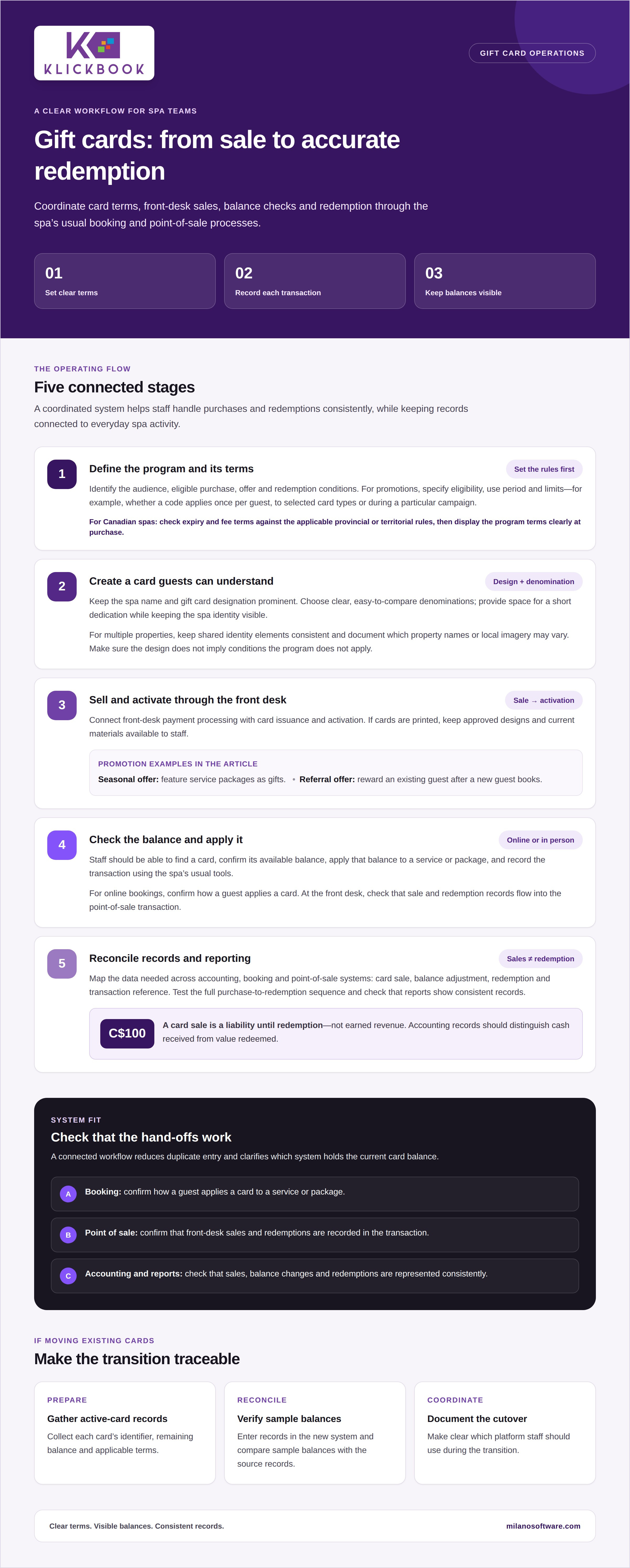
Gift card sales software manages card issuance and promotional activity. Before launching a campaign, define its audience, eligible purchase, offer, and redemption conditions. For example, a seasonal promotion might feature service packages as gifts, while a referral offer could reward an existing guest after a new guest books.
Define promotional codes by eligibility, use period, and limits. Specify whether a code applies once per guest, to selected card types, or only during a particular campaign. These controls help staff distinguish a discounted purchase from the card’s redeemable balance. Before publishing a seasonal campaign, align its terms, sales channels, and staff instructions.
Booking and POS compatibility
Gift cards work with booking and point-of-sale systems when those platforms support issuance, balance records, and redemption. The practical test is whether staff can find a card, apply its available balance, and record the transaction through the spa’s usual tools.
For online bookings, confirm how a guest applies a card to a service or package. At the front desk, confirm that sale and redemption records flow into the POS transaction. These workflows reduce duplicate entry and clarify which system holds the current card balance. Integration with accounting should also distinguish cash received from value redeemed; a C$100 card sale is a liability until redemption, not earned revenue.
Canadian expiration dates and fees
For Canadian spas, assess gift card expiry and fee terms against the applicable provincial or territorial rules. Do not assume one generic policy covers every location or card type. Set the terms for the spa’s program accordingly, then display them clearly during purchase.
Document whether cards expire or carry fees before selling them. Set the system’s card terms to match the approved program and make those terms available to guests at the point of sale. Clear records help staff explain a card’s status and apply its conditions consistently online and in person.
Features and software selection
A spa gift card management system should support card creation, sales, balance lookup, redemption, and reporting. Promotional codes and campaign limits add control over offer eligibility. For software selection in Canada, assess these workflows against the spa’s booking and POS processes rather than relying on a generic ranking of products. The best fit is the system that supports the required transactions and operational reporting.
To migrate existing cards, prepare each active card’s identifier, remaining balance, and applicable terms. Enter those records in the new system, then reconcile sample balances against the source records before staff begin using it. Define the cutover process so teams know which platform to use during the transition.
For accounting, booking, and POS integration, map the required data: card sale, balance adjustment, redemption, and transaction reference. Test the full sequence from purchase through booking or front-desk redemption, then check that the resulting reports show consistent records.
Customization and personalization
Physical gift cards can reflect the spa’s visual identity through approved typography, colour use, and imagery. A Nordic spa might draw on its surrounding landscape, while a resort spa could use architectural details from its own property. Keep design decisions consistent with the experience guests recognize at the destination.
Set a design hierarchy before producing cards. Decide which elements must stand out, such as the spa name and gift card designation, then place supporting details around them. A small property identifier, for example, can distinguish locations without competing with the main brand mark. A documented layout gives designers and staff a shared reference.
Standard denominations give purchasers clear options and help staff explain them consistently. Choose amounts that suit the spa’s gift card program and present them in a simple sequence. Keep values easy to compare at the counter and in promotional materials, with consistent denomination labels wherever guests see the cards.
Personalization can also be built into how a card is presented. A purchaser may want the gift to feel carefully selected, not like a generic transaction. Offer a clear space for a short dedication, and keep the spa identity visible beside it. This preserves the card’s professional presentation while accommodating the sender’s intent.
Keep visual customization separate from the card’s operating terms. Design elements should not suggest conditions the program does not apply. For example, avoid imagery that could make a general gift card appear limited to one facility or experience. Clear wording helps purchasers understand the card without relying on decoration.
For a multi-property group, define which design elements stay consistent and which can vary by location. A shared logo and typography can establish a group identity, while property names or local imagery distinguish individual spas. Document approved versions so front desks use current materials instead of recreating designs locally.
Review the complete card presentation before release. Confirm that the spa name, denomination, any dedication space, and supporting details remain legible together. Then compare the card with its approved design file and display materials. A controlled review process helps keep each version aligned with the spa’s intended presentation.
Before preparing a physical gift card, consider how its materials, finish, and appearance support the spa’s brand and setting. A distinctive design need not distract from the identity guests associate with the destination. Keep the card’s purpose clear and ensure decorative choices suit the spa’s services and locations. A concise design brief can guide decisions and make future updates easier to assess.
Choose standard denominations that are easy to present and compare. Use consistent denomination names and visual treatment wherever the cards are offered, so purchasers can focus on the amount rather than interpreting different formats. Before approving a new version, review the design alongside its denomination information and personalization space. Check that the complete presentation is easy to understand at a glance, including when someone is choosing a gift. These steps keep customization useful while preserving a clear, recognizable presentation.
Front-desk gift card sales and printing
A front-desk sale should connect payment, activation, and issuance in a controlled workflow. When credit card processing is integrated with the point-of-sale system, staff can sell and activate a card in one transaction. This reduces separate entry steps and gives the cashier a clear completion point before handing over the card.
Start with the guest’s selection: a physical card, a balance-based gift, or a service-specific option. Staff identify the card type, enter the purchase details, process payment, and confirm activation before printing or releasing the card. A declined payment must not result in an active card. Link the issued card to its sale in the transaction record.
Keep printing within the sale workflow rather than treating it as an untracked manual task. After payment and activation, staff can print the selected design or prepare a pre-printed card. Match its identifier to the transaction record before handing it to the purchaser. This creates a traceable record if a guest later needs help finding the purchase.
At checkout, distinguish the gift recipient from the purchaser when the workflow allows separate details. A purchaser, for example, may want a receipt while keeping the recipient’s name private. Staff can provide purchase confirmation without adding personal messages to the transaction record. Keep the card’s terms visible alongside the printed material.
Front-desk procedures should cover interrupted transactions. If a printer jams after activation, staff need a controlled way to reprint without issuing a duplicate balance. If payment is declined, the card must remain inactive. Clear exception handling helps prevent duplicate cards, unrecorded sales, and confusion during shift changes.
Physical inventory needs its own controls. Keep unissued cards separate from activated ones, and assign responsibility for replenishment and secure storage. At the start of a shift, staff can confirm that printer materials and approved designs are available. At close, reconcile issued cards against recorded sales and investigate discrepancies.
Receipts should identify the transaction and provide a useful reference for guest support. Explain how the recipient can present the card for redemption without suggesting that its printed appearance determines its balance. A consistent script helps staff answer routine questions and direct balance inquiries through the spa’s established process.
For resort and day spa operations, document the same sale sequence across shifts and locations. Define who may issue, activate, void, or reprint a card, and record exceptions with the transaction. A clear front-desk workflow connects each physical card to its payment and system records, supporting accountable sales without slowing the guest interaction.
Resort operators can use metrics such as voucher sales growth over two years and total voucher sales to assess their programmes. For example, 300 per cent growth or over 4M in voucher sales could be figures to track; they are illustrative measures, not reported results for Celtic Manor Resort or Brookstreet Hotel. Keeping payment, activation, printing, and reconciliation connected helps match each issued voucher to a recorded sale and provide guests with clear confirmation.
Gift card balance checks and redemption
Balance controls connect each card’s recorded value to its transactions. A consistent redemption workflow helps staff apply the available balance accurately to online and in-person purchases.
Online and in-person transactions
Spa gift cards can be sold and redeemed online and in person when the system supports both channels. Online buyers need a clear way to select a card, pay, and receive purchase details. At the spa, staff need to find the same card record and apply its balance at checkout.
For online redemption, connect the card record to the booking or payment flow. A guest booking a service package should be able to enter card details wherever the system accepts gift card payment. The transaction should show whether the balance covered the full purchase or part of it. The guest can pay any remaining amount using the methods available at checkout.
At the front desk, staff can search by card identifier or scan the card, then check its available balance before applying it. The POS record should capture the amount redeemed and the related sale. This creates a transaction trail for the guest’s receipt and operational reporting. If staff cannot find a card, they should follow a defined lookup process before completing payment.
Consistent access across channels matters. A card sold online should be recognizable at the spa, and one issued in person should work through supported online workflows. Test both directions before launch: purchase online and redeem in person, then purchase at the desk and apply online. These scenarios can reveal gaps in access, card lookup, or transaction records.
Balance, expiration, and refund tracking
A gift card system tracks balance by recording the initial value and each later transaction. Redemptions reduce the available amount, while approved adjustments update the record with a reason. Staff should see the current balance before completing a transaction, and managers should be able to review the activity behind it.
Expiry dates depend on the card’s terms and the rules that apply where the spa operates. Store the applicable date or status with each card and display it during a balance check. Consistent setup helps prevent staff from applying different terms to cards sold under the same program.
Refunds also require a recorded transaction. If a purchase is refunded, staff should follow the spa’s refund policy and document whether the card is cancelled, adjusted, or otherwise affected. The system history should preserve the original sale, redemption activity, and adjustment rather than replace the prior balance without context.
After a partial redemption, the record should retain the remaining value for a future visit. For example, if a card pays part of a service package, the next balance check should reflect that transaction. Regular reconciliation of card activity and sales records can help identify duplicate entries, unrecorded adjustments, or discrepancies that need review.
Benefits of gift card management software
A gift card program can support revenue, guest acquisition, and repeat visits. Gift card sales can account for 5-10% of a successful spa’s total annual revenue. Software helps operators manage the program as a measurable sales channel, rather than a collection of disconnected transactions.
Consistent records also help managers assess campaign performance. They can compare sales by campaign, card type, and channel. For example, reviewing a seasonal campaign alongside regular card sales can show which offers generate purchases and which may need adjustment before the next campaign.
Gift cards can introduce new guests to the spa. A recipient may choose a service beyond the card’s value, creating an opportunity to experience additional offerings. Gift card recipients are described as likely to spend 20-50% more than the card’s initial value. Treat this as a potential spending pattern, not a guaranteed result for every guest.
Consistent records improve operational visibility. Managers can review sales, redemptions, and remaining balances through reporting, then compare activity across locations or channels to identify where staff may need clearer procedures. Recurring differences between recorded sales and issued cards, for example, warrant transaction-level review.
Promotional controls support disciplined campaign execution. Set eligible card types, the campaign period, and code conditions before launch. Then assess results against the intended objective, such as attracting first-time guests or encouraging return visits. Clear campaign records distinguish promotional activity from standard card sales.
Security and fraud controls should address unauthorized issuance, duplicate redemption, and unapproved balance changes. Limit sensitive actions to authorized staff, retain transaction histories, and investigate unusual activity, such as repeated adjustments or mismatches between sales and card records.
Defined procedures also strengthen front-desk accountability. Staff can follow a consistent process for issuing, adjusting, and redeeming cards, while managers review exceptions. Requiring a recorded reason for a balance adjustment, for example, creates context for reconciliation and staff handovers.
For Canadian spas, terms and campaign settings should reflect the rules that apply where the spa operates. Keep approved terms accessible during purchase and redemption. Consistent program records help staff apply those terms and give managers a clearer basis for reviewing card activity.
The strongest operational benefit is visibility: leaders can connect campaign decisions with sales and redemption records. Explore integrated spa operations to see how a coordinated platform can support reporting and point-of-sale workflows.
Milano Software
Milano Software brings spa management, online booking, reporting, and point-of-sale capabilities together. These tools give spa teams a broader operational context for managing sales activity and reviewing performance. Gift card workflows can be considered alongside booking and checkout, rather than treated as a separate administrative task.
This is a practical next step when a spa is reviewing how its sales, booking, and reporting workflows fit together. The appropriate configuration depends on the operation’s needs and existing processes. Contact Milano Software to discuss your spa’s operational requirements.
Build the Next Stage of Your Gift Card Program
Start by defining what the gift card program should contribute to the guest experience and the spa’s operations. Identify the outcomes leadership wants to prioritize, then decide how to assess progress. A spa gift card management system can support those goals when its role fits the broader operating plan.
Use those priorities to frame the decision: clarify the operational objectives, ownership, and measures that will guide future program changes. This keeps the next phase focused on business needs rather than isolated features. Plan the next stage of your gift card program with Milano Software, and move forward with a clear operational brief.
Frequently Asked Questions
Which spa booking and POS systems support gift cards?
The right system needs to support card issuance, balance records, and redemption within the spa’s booking and POS workflows. Staff should be able to find a card, apply its available balance, and record the transaction.
What are the best spa gift card software systems in Canada?
Choose a system that supports the spa’s gift card transactions and reporting needs within its booking and POS workflows. Assess how it handles card sales, balance lookup, redemption, and reporting.


