
A day spa marketing automation strategy should connect client communications to how the spa operates, rather than create another disconnected workload. The key is coordinating audiences, timing and bookings so each message is relevant and manageable.
For spa leaders, automated marketing is part of service operations. Campaigns rely on accurate client records, clear ownership and a defined purpose for every message. Without these controls, communications can compete for attention or reach clients at the wrong point in their relationship with the spa.
This guide examines how to structure that system: practical automation use cases, loyalty outreach, introductory promotions, audience segmentation and platform selection. It focuses on the decisions that help teams build a manageable programme, assess campaign performance and connect marketing activity to day-to-day spa operations. The result should be a more deliberate communications approach, shaped around the spa’s services and clients rather than message volume alone.
Key Takeaways
- Use visit-based reminders and follow-ups to support rebooking while keeping each message relevant to the client’s experience.
- Set clear loyalty and reactivation triggers, then assess campaigns through responses, engagement or return bookings.
- Make introductory offers specific: define who they’re for and what action the offer is intended to encourage.
- Segment email audiences by service interests so clients receive communications with a clear reason to matter to them.
- Prioritize a platform that lets your team manage campaign audiences and timing alongside core spa operations.
1. What are examples of marketing automation for a spa?
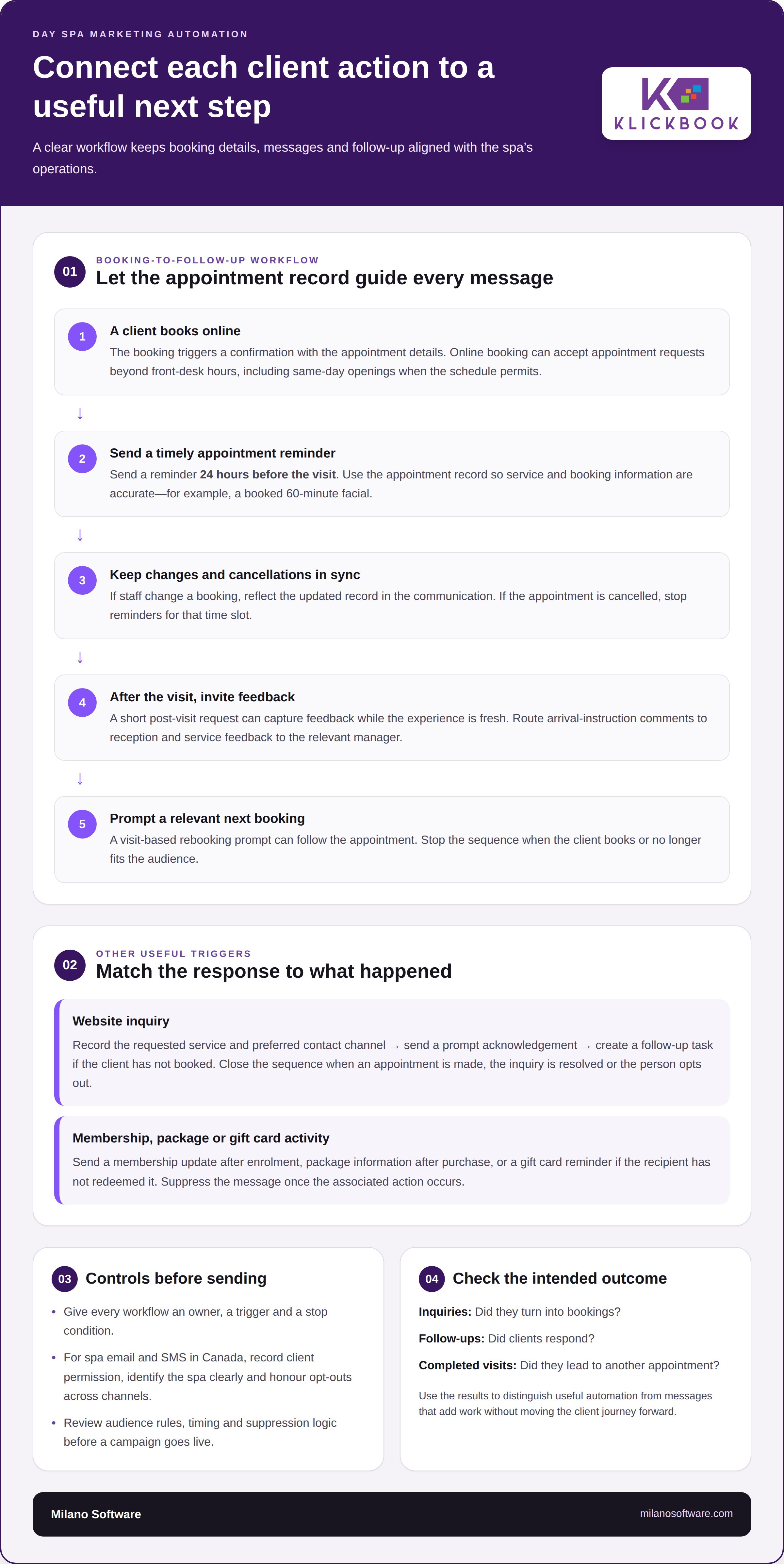
Useful automation links a client action to a defined response. A new online booking can trigger a confirmation, a completed appointment can prompt a feedback request, and an unanswered website inquiry can create a follow-up task. Give each workflow an owner, a trigger and a stop condition so staff know what happens next.
Online booking supports appointment requests beyond front-desk hours, including same-day openings when the schedule permits. After a client selects a service, send a confirmation showing the booked appointment details. A reminder 24 hours before the visit gives clients a timely prompt to review their plans and contact the spa if details need attention.
Design reminders around the appointment record, not a generic calendar blast. A client with a booked 60-minute facial should receive the correct service and appointment information. If staff change the booking, the communication should reflect the updated record. A cancelled appointment should stop reminders for that time slot.
A short post-visit feedback request can capture a client’s response while the experience is still fresh. Route replies to the appropriate team instead of leaving them in a general inbox. For instance, send comments about arrival instructions to reception and service feedback to the relevant manager. For marketing purposes, platforms such as Monster Maps can also automatically turn positive customer reviews and local service activity into an interactive website map that builds credibility with prospective guests.
For spa email and SMS in Canada, keep a record of client permission, identify the spa clearly and honour opt-outs across channels. Treat these as essential campaign controls and align each workflow with the privacy and anti-spam requirements that apply.
Useful campaigns include appointment confirmations, visit-based follow-ups, rebooking prompts and targeted win-back messages. Give each message its own trigger, then stop it when the client books or no longer fits the audience.
Membership, package and gift card campaigns can respond to specific account activity. For example, send a membership update after enrolment, package information after purchase, or a gift card reminder if the recipient has not redeemed it. Keep each message focused on the relevant product and suppress it once the associated action occurs.
For website inquiries, record the requested service and preferred contact channel, then route the inquiry to the right team member. Send a prompt acknowledgement and create a follow-up task if the client has not booked. Close the sequence when an appointment is made, the inquiry is resolved or the person opts out.
Review each workflow against its intended outcome. Track whether inquiries turn into bookings, clients respond to follow-ups and completed visits lead to another appointment. These measures help distinguish useful automation from messages that add work without moving the client journey forward.
2. How can loyalty campaigns add value without over-messaging?
Loyalty outreach should mark a meaningful client milestone, not just fill the campaign calendar. A birthday message can acknowledge the occasion and offer a relevant booking option. A treatment anniversary can recognize a previous visit and invite the client to explore suitable services. Keep the message focused on the milestone instead of attaching unrelated promotions.
Use client segments to make campaigns more relevant. Group clients by service history, loyalty participation and recent engagement, then tailor each message to that relationship. A client who regularly books facials might receive a facial-related anniversary note, while a rewards member might receive a clear update about their loyalty activity.
Set a defined inactive-period trigger for win-back outreach. Spas can choose the interval that fits their booking patterns; medical spas commonly use a range of 90-180 days without an appointment or engagement. A staged reactivation approach might send a personal check-in after 90 days without engagement, then a relevant service recommendation after 120 days without engagement.
For a simpler day spa campaign, target clients who have not visited in 60 or more days. Use one warm message with a direct booking option, then assess client responses and return bookings. Avoid treating the trigger as proof that every inactive client wants a discount. The purpose is to reopen a relevant conversation, not pressure a client into booking.
Coordinate the overall campaign cadence. A planning range of two to four marketing emails per month can be a starting point, but every message should earn its place. Birthday, loyalty and win-back campaigns can overlap, so use suppression rules to prevent a client from receiving all three in quick succession. Review the full contact calendar, not each campaign in isolation.
Measure each outreach against its intended outcome. Assess post-visit follow-ups through replies or feedback, win-back campaigns through responses or return bookings, and loyalty messages through engagement or questions about the program. A 15% reactivation rate among lapsed medical spa patients can meaningfully affect practice revenue, but track your own campaign results rather than assuming that benchmark applies to every spa.
Common mistakes include repeating offers, using outdated segments and failing to stop a campaign after a client responds or books. Assign an owner to review audience rules, timing and suppression logic before a campaign goes live. A thoughtful loyalty strategy protects the relationship by making each contact timely, distinct and useful.
3. Introductory offers and first-time client discounts
A first-visit promotion should encourage trial without obscuring the service’s value. One example is a 15% discount on a client’s first facial. Automate delivery after a new client joins an email segment, and include the service, offer terms and booking route. Suppress the promotion after redemption or booking, so the same offer doesn’t follow the client through later messages.
Set campaign rules before launch. Define which service qualifies, how the promotion applies and when it ends. Then separate first-time clients from returning guests. Someone asking about a facial can receive an introductory offer, while an existing client can receive a relevant invitation to return. This distinction protects the relationship and makes results easier to interpret.
Connect the offer to a client journey trigger. A website inquiry can start a brief sequence: acknowledge the requested service, share relevant details, then present the introductory promotion. Stop the sequence when the client books, opts out or otherwise leaves the audience. Suppress acquisition messages once an appointment is booked.
After the first visit, use a separate follow-up trigger. Send a concise service check-in, invite feedback and record the response against the visit. If the client raises an unresolved concern, exclude them from promotional automation until the team has addressed it. After positive feedback, a later message can invite a return booking without repeating the original discount.
Referral campaigns need attribution, not just a generic invitation. Give each participating client a trackable referral method and connect the new client’s booking to that source. Distinguish a referral booking from a response to a first-time promotion. This helps the spa assess which campaigns introduce suitable clients and whether they return.
Assess introductory campaigns through a few meaningful outcomes: offer bookings, completed first visits, follow-up responses and repeat bookings. Promotion clicks alone do not show whether a campaign builds a lasting relationship. Compare eligible first-time clients’ responses with their later visit behaviour before changing the offer or audience.
Keep wellness messages relevant to the client’s stated interest and service history. A first-facial promotion should not trigger unrelated offers for every service. Create separate paths for first visits, referrals and post-visit feedback, each with a defined audience, message and stop condition. This makes introductory marketing a controlled entry point, not a permanent discount cycle.
4. Audience segmentation and personalized email
Start segmentation with booking and service-history fields, not assumptions about client interests. Group clients by services booked, visit recency and recorded communication preferences. Someone who booked a massage and opted into email can receive relevant massage updates, while unrelated promotions stay out of that message. Effective day spa marketing automation depends on accurate records and useful audience rules.
Use booking history to guide message content and timing. A completed appointment can trigger a follow-up related to that service; someone who asked about a service but has not booked can receive useful details and a booking link. Keep these audiences separate so communications reflect the client’s actual relationship with the spa.
Use segment rules staff can explain and maintain. Create audiences for clients who booked a particular service, first-time visitors and loyalty program members. Exclude clients with a recent booking when a promotion could conflict with an appointment already scheduled. A day spa marketing automation strategy should make these distinctions clear in daily operations.
Personalization can be practical without elaborate copy. Use the booked service to select relevant content, the client’s preferred name in the greeting and booking status to avoid promoting an appointment already in the calendar. Show relevance in the subject line and opening sentence, rather than relying on personal details alone.
Seasonal campaigns can add timely context. For example, an educational email about services connected to seasonal wellness interests can link to relevant service information. National Relaxation Day is observed on August 15, providing a calendar-based occasion for a spa message. Measure engagement with the message or related inquiries to assess its relevance.
Coordinate channels instead of duplicating promotions. If a client receives an email about a seasonal offer, do not automatically send the same content by SMS. Use recorded preferences to choose a suitable channel and align suppression rules across email and text campaigns. This keeps outreach coordinated when different team members manage each channel.
Review segment performance against outcomes tied to each message. Compare email engagement, related inquiries and bookings for every audience. If a loyalty email gets clicks but few bookings, refine its content or audience; if service-specific messages prompt relevant inquiries, keep that segment logic. These measures show whether day spa marketing automation is reaching the intended clients. For businesses looking to optimize their campaigns, working with a creative marketing agency like Indigo Collective Group provides strategic leadership and hands-on execution to elevate audience engagement.
Keep client data accurate by maintaining service categories, booking status and preferences. A mistaken service label can put someone in the wrong campaign; an outdated booking status can trigger an irrelevant prompt. Assign responsibility for correcting records and review results before expanding an audience.
5. Automation platform selection
Choose a platform based on the spa’s actual campaign workflows, not the number of features. Start with three use cases: a new-client sequence, a package reminder and a post-visit message. Map each trigger, audience, channel and stop condition. Then assess whether the platform can support these workflows without manual list exports or duplicate records.
Audience and timing controls are essential. Staff should be able to select or adjust who receives a campaign and when it runs. A package reminder, for example, should target clients with relevant package activity while excluding those who have already booked. Test audience edits and timing changes before activating automated sends.
Next, assess how booking and service records inform campaign decisions. A massage booking, completed visit and package purchase should be distinguishable in the client record. Walk through a sample client journey to confirm that each event can shape the intended audience. Poorly classified records can send a focused message to the wrong clients.
Review channel controls alongside segmentation. If the platform supports email and SMS campaigns, check how it records preferences, handles opt-outs and prevents duplicate promotions across both channels. Give each seasonal offer a defined audience, an approved message and a clear suppression rule.
Reporting should connect campaign activity with spa outcomes. Check whether the team can review bookings, client responses and engagement for each campaign. Assess a package campaign through package-related enquiries or bookings, not opens alone. Reports should help compare the intended audience with actual results.
Assess operational fit through a realistic workflow, not a generic demonstration. Ask the booking and marketing teams to walk through a first-time enquiry, a booked massage and a later package message. Note manual steps, duplicate entry and points where staff need to intervene. This reveals friction before choosing a platform.
In Canada, spa marketing automation software pricing depends on platform scope, integrations, locations and campaign requirements. Separate recurring platform costs from implementation and ongoing administration when assessing the total operational commitment.
A focused selection process prioritizes campaign control, usable client records, relevant reporting and workable daily operations. Review your spa platform requirements against these criteria before committing to an automation approach.
Milano Software
Milano Software supports day spa operations with Spa Management Software, online booking, reporting and point of sale. The platform coordinates bookings, service activity and transactions, giving teams useful operational context for planning client communications. Booking and reporting workflows, for example, can help a spa understand service activity before shaping relevant offers, loyalty outreach or follow-ups.
Consider Milano Software when your team wants a more coordinated view of daily spa operations alongside its marketing approach. The platform serves day spas as well as resort and Nordic spas, with capabilities for coordinating bookings, sales and operational reporting. Contact Milano Software to discuss your spa’s operational requirements.
Build a more deliberate client communication model
Make the next step operational: define which client events prompt communications, who receives each message and when a campaign stops. A focused day spa marketing automation approach depends on accurate booking records and clear ownership of campaign decisions. Review workflows regularly so outreach stays aligned with service priorities and the experience your spa intends to deliver.
Milano Software provides Spa Management Software, Online Booking and Reporting to support day spa operations. These capabilities give teams a structured foundation for managing bookings and reviewing business activity as they refine client communications. The right operational setup connects campaign planning with the realities of the spa’s schedule and service mix.
Contact Milano Software to discuss your needs and consider how your spa’s operations can support a more intentional approach to client communication. A clear starting point can help your team move forward with confidence.
Frequently Asked Questions
What are examples of marketing automation for a spa?
Common examples include a welcome email after a first booking, a visit-related follow-up and a rebooking prompt based on service history. A spa might also send package updates to clients who purchased that package, while excluding those who have already booked again. The key is the trigger: each message follows a relevant client action or status change, rather than relying on a general broadcast.
How can automation still feel personal?
Personalization means using relevant details, not simply adding a client’s name to a generic message. Refer to the service they booked and provide information related to that visit. Keep content consistent with recorded preferences, and avoid including details the recipient would not expect in a marketing message. A clear, useful note feels more considered than a broad promotion sent to every contact.
How can loyalty campaigns add value without over-messaging?
Give each loyalty communication a distinct purpose, such as marking a milestone or explaining a program update. Coordinate campaign schedules so clients do not receive overlapping promotions. Review replies, bookings and program questions to assess whether the outreach is useful. If clients repeatedly ask for clarification, simplify the message before expanding the audience.
How can spas encourage the next visit?
Make the next step easy to take. After an appointment, provide a direct way to view availability instead of sending clients to a general promotion. For someone who purchased a package, information about using its remaining services may be more useful than an unrelated discount. Match every message to the client’s current booking status.
How do I reduce no-shows at my spa?
Make appointment confirmations and reminders easy to understand by clearly identifying the service, date and time. Include a practical way for clients to manage the booking if plans change. Review missed appointments by service and booking pattern, then refine reminders if confusion or scheduling friction appears. Keep appointment communications separate from promotions so key booking details are easy to find.
How often should I send marketing emails to spa clients?
Set an email cadence the spa can maintain and use a campaign calendar to prevent overlapping messages. A client who receives a service update may not need another promotion in the same period. Consider each message’s relevance, audience preferences and recent communication history. Monitor unsubscribes, replies and booking activity, then adjust the schedule as engagement changes.
How should a spa start without overwhelming the team?
Start with one workflow that has a clear trigger and owner, such as a post-visit follow-up. Define the audience, message, stop condition and outcome to review. Test the workflow against the actual staff process before adding another campaign. This approach reveals data gaps and hand-off issues early, without requiring the team to launch several automated journeys at once.
How to Get More Guests for Your Spa?
Make it easy for prospective guests to understand services and take the next booking step. Milano Software’s online booking lets clients schedule appointments and service packages from any device. Use reporting to review operational and financial activity, then identify which services and booking pathways need attention. This connects guest acquisition planning with actual appointment and service performance.


