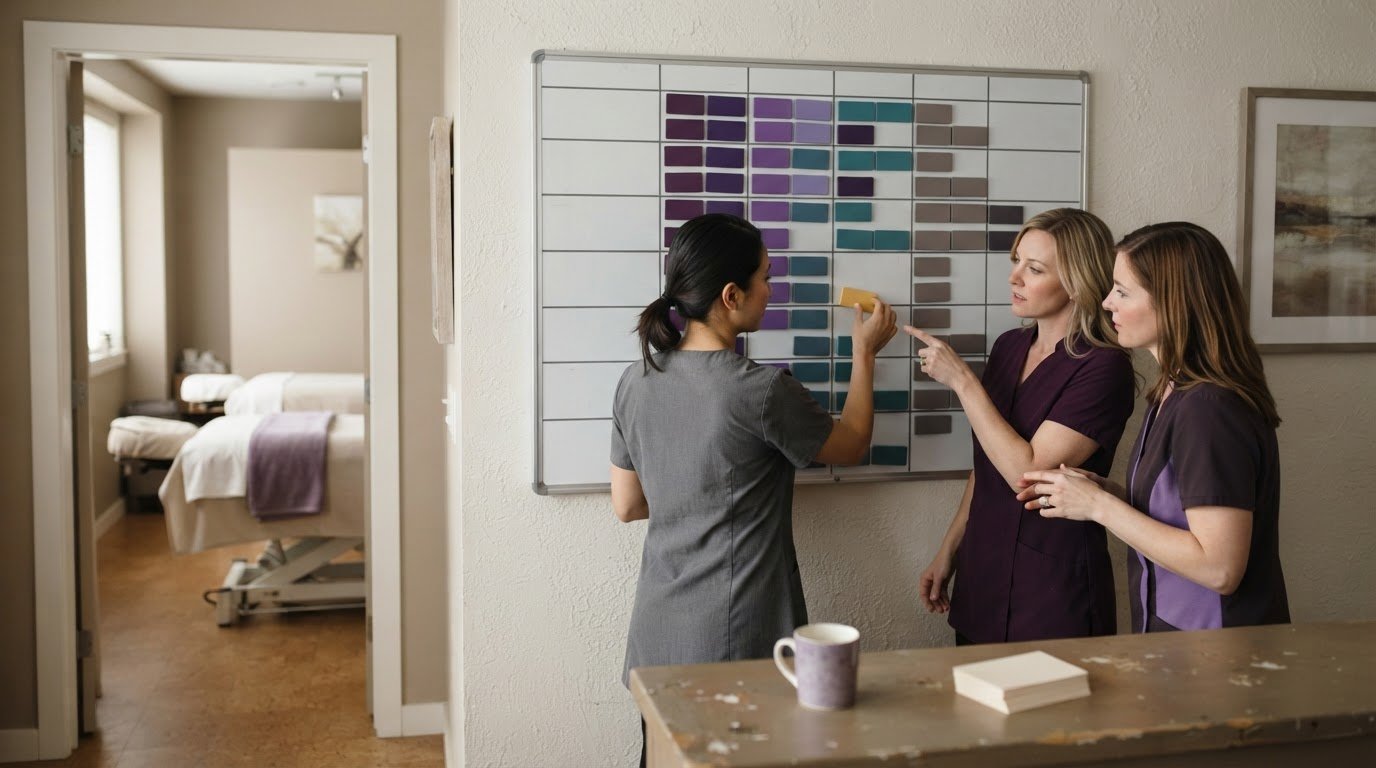

Payment friction often starts before a guest reaches the front desk. Integrated payment processing for spas connects booking, point of sale, and transaction records so deposits, in-spa purchases, service charges, and tips can follow a consistent operational workflow.
That connection matters because a payment is more than a completed card transaction. It should correspond to the right appointment, service, staff member and sales record, whether a guest pays during online booking or at checkout. When those details sit in disconnected systems, reconciliation and revenue tracking become harder to manage.
For Canadian spa operators, the right setup depends on the payment methods guests can use, how fees are structured, when funds are deposited, and how payment records fit the business’s booking and sales processes. This article explains how booking and POS integration works, how to organize payments across services, retail and staff, and what to consider when building a practical payment workflow.
Key Takeaways
- Map how each payment moves from booking or checkout into the transaction record, so sales and reconciliation follow a consistent workflow.
- Assess card, digital wallet, and bank-payment options against where guests pay and how each method fits the spa’s operations.
- Keep package and service payments associated with the relevant appointment and staff records to improve operational visibility.
- For Canadian operations, assess processing fees, deposit timing, and payment-data safeguards as part of the overall setup.
- Milano Software’s Spa Management, Online Booking, Point of Sale, and Reporting offerings can support a connected view of bookings and sales.
Integration of booking, POS, and payment records
A connected workflow ties each payment to its appointment, service and sales record. Integrated payment processing for spas links booking and point-of-sale activity, reducing the need to reconcile disconnected transaction records.
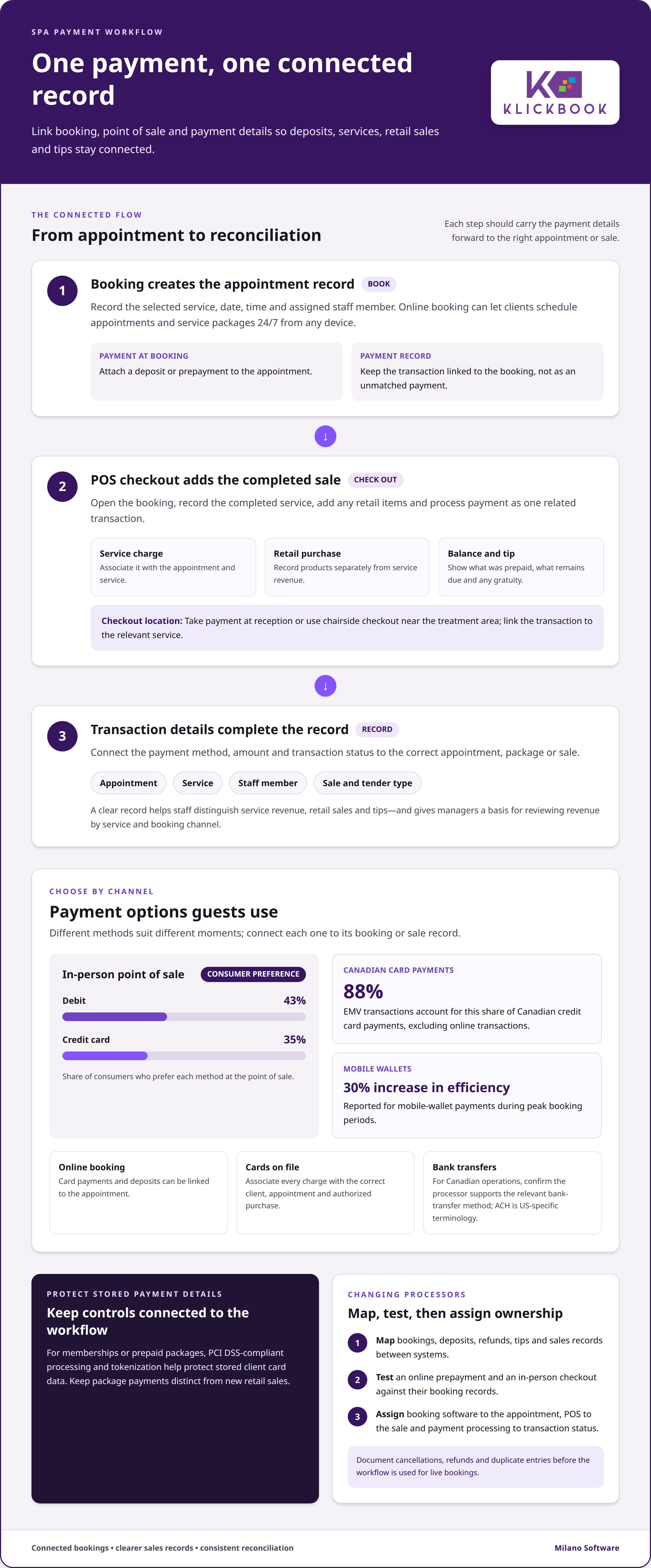
Spa scheduling begins with an appointment record: selected service, date, time, and assigned staff member. Online booking can let clients schedule appointments and service packages 24/7 from any device. When a client books a massage, for example, the system should associate the payment with that appointment rather than leave it as an unmatched transaction. This relationship supports a clearer view of revenue by service and booking channel.
Integrated POS and Booking Systems
An integrated POS and booking system connects appointment details with checkout and sales records. At reception, staff can open the booking, record the completed service, add retail items and process payment in one related transaction. This helps managers distinguish service revenue from retail sales without relying on separate records. It also gives staff a consistent way to handle changes, such as a client adding a product at checkout.
Deposits, Tipping, and Payment Features
Spa payment software should connect booking, POS checkout, deposits and tips to the relevant appointment. Deposits can be collected during online booking or prepayment, while checkout records the remaining balance and any gratuity. This gives staff a clear view of what was paid in advance and what remains due after the service. A detailed transaction record also separates service charges, retail purchases and tips.
Payment options should fit the channel. A Canadian spa may accept card payments in person and during online booking, with each transaction associated to its booking or sale. EMV transactions account for 88% of Canadian credit card payments, excluding online transactions. That figure illustrates why in-person checkout and online payment flows need to be treated as distinct methods, while still connecting to the same appointment record.
Migrating Processors and Connecting Software
Migration means moving payment operations from a current processor and connecting the new workflow to booking software. Start by mapping how bookings, deposits, refunds, tips and sales records move between systems. Then test representative transactions, such as an online prepayment and an in-person checkout, and reconcile each against its booking record. This can reveal mismatched fields before staff begin using the new workflow.
During a processor transition, define which system owns each record: booking software for the appointment, POS for the sale and payment processing for the transaction status. Document how to handle cancellations, refunds and duplicate entries. A test appointment can confirm that the payment method, amount and transaction status appear in the expected records before the workflow is used for live bookings.
Credit cards, digital wallets, and ACH
Payment choice affects how guests book, settle service balances and purchase retail. A Canadian spa can organize its payment methods around the transaction channel and the records each method requires.
Credit cards, debit cards, digital wallets and bank-account transfers suit different situations. Whatever the method, the operational goal is to record each transaction against the right appointment, package or sale.
Card and Digital Wallet Payments
Card and digital wallet payments let guests pay electronically at checkout or through an online booking flow. At a front desk, a guest may tap a debit card; during online booking, another may pay by credit card. Mobile wallets add another checkout method, which can help maintain flow during peak booking periods. Payments via mobile wallets reportedly show a 30% increase in efficiency during peak booking periods.
Payment preferences vary by channel: 43% of consumers prefer debit at the point of sale, while 35% prefer credit card payments there. Those figures make it useful to distinguish in-person checkout from online payment choices. A spa’s POS workflow should identify the tender type and connect the completed transaction to its sale record. That gives staff a clearer basis for handling refunds and reviewing revenue by payment method.
Cards on File and Chairside Checkout
A card on file is a stored payment credential used for a later transaction, while chairside checkout lets staff take payment near the treatment area. Together, these options can spare guests a return trip to reception after an appointment. For memberships or prepaid packages, PCI DSS-compliant processing and tokenization help protect stored client card data.
Operational controls matter: staff should associate each card-on-file charge with the correct client, appointment and authorized purchase. For example, a package payment should remain distinct from a new retail sale. Chairside checkout should also create a transaction record linked to the relevant service. Clear records help the front desk answer questions without searching through unrelated entries.
ACH refers to electronic bank-account payments, but Canadian operators should distinguish the payment method available to them from US-specific terminology. The practical question is whether the processor supports the bank-transfer method used for Canadian transactions and can link its status to the booking or sale. A bank transfer may follow a different workflow from an immediate in-person card payment, so payment timing and reconciliation should be visible in the transaction record.
Gift cards and loyalty activity require clear records of when value is issued, redeemed or applied to a purchase. For example, a guest might redeem a gift card towards a service and pay the balance by debit card. The POS record should show both tender amounts while retaining one clear sale. This makes service and retail reporting more useful than a single, undifferentiated payment total.
Managing payments across services and staff
Payment records are more useful when they connect service delivery, staff assignments and the spa’s cash-flow position. A shared platform can link each completed appointment to the service sold, the responsible staff member and the transaction status. Managers can then see whether a service was completed and paid, rather than treating the appointment schedule and sales ledger as separate operational records.
Some standard POS systems may take three full business days to deposit a spa’s funds. Deposit timing affects how managers forecast available cash for payroll, supplier invoices and operating expenses. Next-day or same-day deposits may support cash flow, but the actual timing depends on the processing arrangement. In revenue reports, distinguish the transaction date from the deposit date.
Integrated payments can support memberships, packages, gift cards, and recurring billing by linking the payment record to the client’s entitlement and redemption history. For example, a prepaid package can show its original payment and later appointments against the same client account. More than 50% of spas offering subscription packages reportedly use recurring billing, making clear records of scheduled charges and account status operationally relevant.
Package tracking also affects service capacity and inventory. When a client redeems a visit from a prepaid package, the platform should record it against the package balance and completed service. Staff can then distinguish a newly collected payment from a previously paid appointment. Gift card redemption needs similar clarity: issuing the value and using it towards a later purchase are separate transactions.
Client management improves when payment history and appointment activity can be reviewed together. A client who books a recurring service, pauses visits or has an unused package presents different retention signals. Managers can use those records to coordinate appropriate follow-up without treating every inactive account as a missed payment. At a resort spa, linking client activity to service history can also help staff prepare for a returning guest.
Staff schedules and payment records should align without confusing service attribution. Assign each appointment to its scheduled staff member, then link the completed service and transaction to that appointment. If the client changes providers before the service, update the appointment record so the final attribution is accurate. This supports staff-level reporting while keeping checkout straightforward.
Mobile payment can extend checkout beyond reception, for example, when a resort spa guest makes a purchase near the service area. A consistent record should capture the service or retail item, assigned staff member, payment status and any package redemption. Managers can then review service revenue, staff utilization and retail inventory movement using transaction records rather than disconnected notes.
Payment processing for Canadian spa businesses
A Canadian spa’s payment setup should suit its business model, payment channels and membership billing cycle. Processing choices also affect how transactions and client data are managed.
Payment Support for Spa Businesses
Payment processing connects a merchant’s in-person and online transactions with the spa’s operating records. A day spa may take payment at reception, while a resort spa may also offer mobile checkout. Each channel should record the payment method, transaction status and related sale. This gives managers a consistent view across locations and service types.
The business model shapes the workflow. A spa selling individual appointments needs a clear checkout process; a membership-based operation also needs to track recurring charges and member account status. A monthly membership payment, for example, should remain distinct from a separate retail purchase. This separation supports revenue reporting and helps staff answer questions about charges.
Interac, Cards, Contactless, and Wallets
Canadian spas can set up payment acceptance for Interac debit, credit cards, contactless transactions and digital wallets. Available methods may vary by channel: a guest might tap a debit card at reception or use a digital wallet during mobile checkout. Suitable options across these touchpoints give clients flexibility while keeping each transaction linked to the right sale.
Payment methods should also fit the merchant’s reporting process. A POS record can distinguish debit, credit and wallet transactions, making settlement and revenue reviews clearer. For example, a front-desk purchase and an online membership renewal should appear as separate transactions, even if they relate to the same client. Clear channel records help staff investigate discrepancies efficiently.
PCI DSS, Privacy, and Payment Security
PCI DSS is a payment-processing security standard that requires annual assessment and implementation of controls. Canadian spas handling stored client card data for memberships or prepaid packages should use PCI DSS-compliant processing and tokenization to protect that information.
Privacy practices should limit unnecessary access to client payment data. Staff scheduling appointments may need booking details, for example, while payment credentials should remain protected through the processing workflow. Tokenization replaces exposed card details with a token for subsequent transactions. This separates payment handling from routine client records and supports a more controlled approach to recurring billing.
For recurring memberships, the spa should link each scheduled charge to the member account and make the payment outcome visible. A declined renewal, for example, should be distinguishable from a successful charge or an in-person purchase. Consistent records help staff follow up without confusing billing history with service revenue.
Service, retail, and tip transactions
A spa’s POS workflow must distinguish service charges, retail purchases and tips. Recording each as a separate transaction type gives owners a clearer view of sales and supports accurate reconciliation. A guest might pay for a completed treatment, purchase skincare and leave a tip during one checkout. The record should preserve each component rather than combine them into one unexplained total.
At the POS, staff can select the completed service, add products and record the guest’s chosen payment method. This creates a useful transaction trail: the appointment links to the service, the product line links to retail inventory, and the tip remains identifiable as gratuity. If a guest later returns an unopened product, staff can find the retail line without confusing the refund with the original service charge.
Tips need consistent handling in checkout records. A guest may add a gratuity at the terminal after a massage, or a front-desk employee may enter it during payment. Keep the tip distinct from service revenue, with the related appointment and staff attribution available for review. This helps managers understand daily sales without treating every amount as service income.
Retail POS and ecommerce involve different customer journeys. In person, a guest can choose a product after an appointment and pay at reception. A spa can also offer online purchases through its website and connect payment processing to that sales channel. Each order should identify the products sold, payment status and fulfilment outcome, creating a clearer view of retail activity across in-person and online sales.
An online skincare order paid for before pickup and an in-person purchase of the same product have different payment timing and fulfilment steps. Keeping the sales channel and order status distinct helps owners review retail performance and identify outstanding pickups. Monthly reports can then separate service revenue from retail transactions rather than relying on one combined sales figure.
Cash flow also depends on how quickly retail sales, service transactions and tips appear in financial records. A daily close can group transactions by service, product, payment method and staff attribution. Managers can investigate a discrepancy by tracing the original sale instead of comparing disconnected totals. Checkout is operationally useful only when its records remain clear after the guest leaves.
For spa operators assessing POS workflows, Milano Software’s Point of Sale capabilities address the transaction side of service and retail operations.
Milano Software
Milano Software connects spa operations through Spa Management, Online Booking, Point of Sale and Reporting. For operators reviewing payment workflows, these capabilities bring bookings and sales into the broader operating picture, helping teams understand how appointments, checkout activity and revenue records relate.
These tools are useful when disconnected booking and sales processes make daily operations or performance reviews difficult. Online Booking supports appointment and service-package scheduling, while Point of Sale supports transaction handling. Reporting provides operational visibility. Together, these functions help spa teams assess payment processing in the context of their booking and sales workflows.
Contact Milano Software to discuss how its spa management capabilities can support your operation.
Make payment operations part of the wider system
A sound approach to integrated payment processing for spas starts with a clear view of how payments fit the operation. Define the records your teams need, then align workflows around them. This gives decision-makers a practical basis for assessing operational fit instead of treating payment processing as an isolated function.
For operators refining processes across a day spa, resort or wellness group, the next step is to assess how payment workflows support the operating model and management priorities. A focused discussion can clarify where greater coordination would help.
Contact Milano Software to discuss spa payments and the workflows your operation needs to support. A well-aligned system can give your team a stronger foundation for managing daily spa operations.
Frequently Asked Questions
Which payment processors and spa management platforms integrate in Canada?
Integration depends on the specific processor, platform and transaction flow. Milano Software provides spa management capabilities with online booking, point of sale and reporting. For a Canadian operation, map the processor connections needed across locations and sales channels, then assess whether each transaction can be reconciled with the appropriate business record. The key question is whether the integration supports your operating model, not simply whether both systems are available in Canada.
How do payment processing fees for Canadian spas compare, including rates and monthly costs?
Compare per-transaction charges separately from software subscriptions, monthly minimums, and other account costs. Canadian salons’ credit card processing fees are reported at 1.5% to 2.9% per transaction, depending on card type and pricing model. A quoted rate alone doesn’t show total cost: assess the transaction mix, contract terms, and any additional charges together. This makes comparisons more relevant to the spa’s actual sales profile.
How do spa payment systems handle online bookings, deposits, cancellations, and no-show fees?
Systems can link a booking to its deposit and any subsequent payment adjustment, while the spa’s published cancellation policy guides how staff handle cancellations or missed appointments. For example, a policy can specify when a deposit is retained or refunded. Communicate the terms to clients before applying a late-cancellation or no-show fee. Consistent records help staff apply the stated policy and explain the outcome for a specific booking.
What should Canadian spas compare when choosing an integrated payment processor, including contracts and hardware?
Compare transaction pricing, monthly minimums, contract duration, renewal and termination terms, settlement timing and equipment charges. For hardware, assess whether terminals suit the spa’s intended checkout locations and payment methods, and clarify replacement and connectivity arrangements. Then test a sample refund and end-of-day reconciliation against the spa’s reporting needs. This broader review helps owners assess operational fit, not just the headline processing rate.